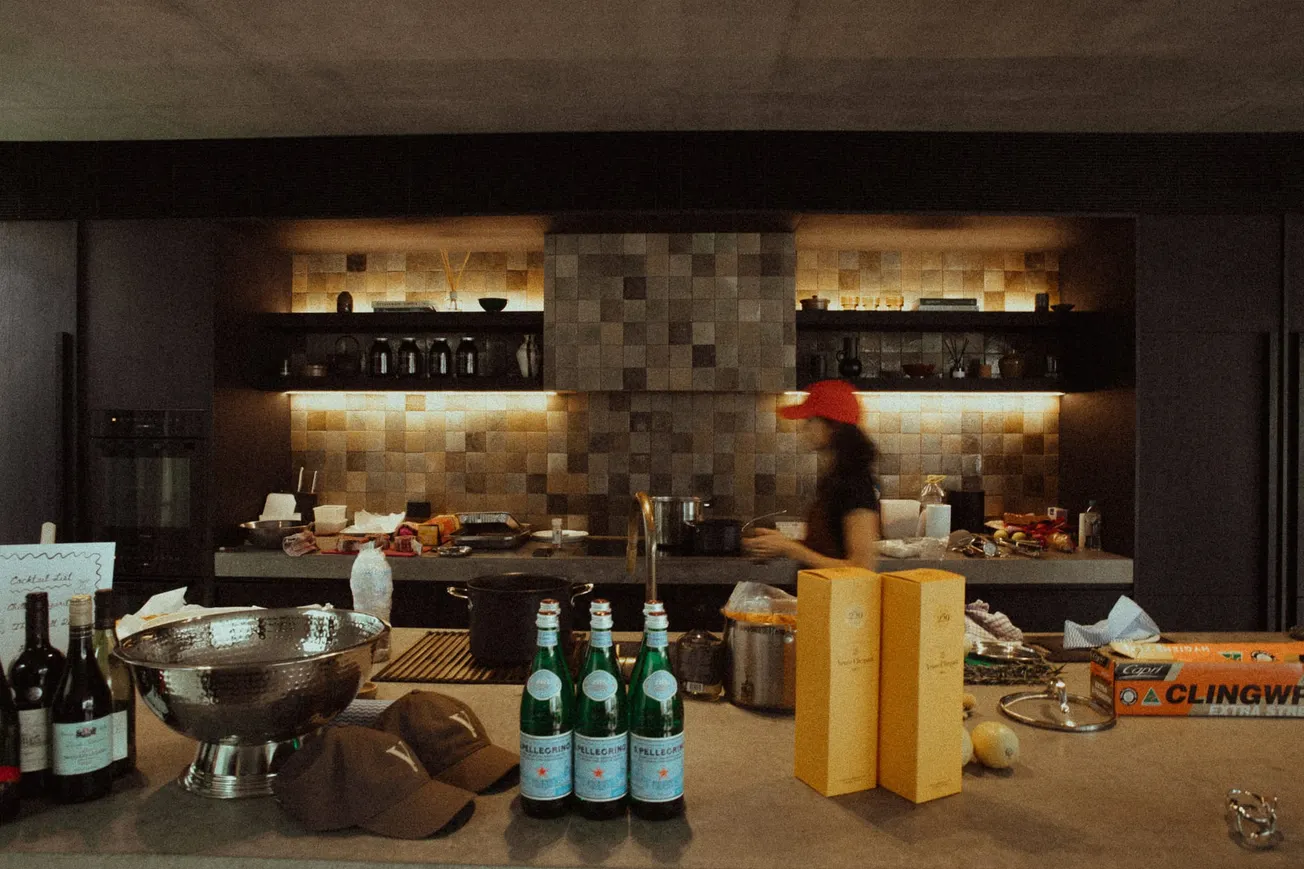
We watched the open shelving arrive. First in AD, then in the homes of friends who'd hired the same four designers everyone was hiring that year. The cabinets came down, the dishes went on display, and suddenly every kitchen in our circle looked like a Parisian apartment or a Copenhagen showroom: unlacquered brass, fluted glass, and ceramics from that one shop in Marrakech arranged with the careful nonchalance of someone who'd spent two hours making it look unplanned.
We didn't do it.
Not because we were certain. Because something felt off, and we'd learned by then that the feeling was worth more than the architect's rendering.
We couldn't quite articulate why we didn't want our glassware visible to guests, or why the thought of someone dusting those shelves every week felt like a problem we were manufacturing for the privilege of looking editorial in our own kitchen.
We kept the Smallbone cabinetry, let the designer move on to another client, and said nothing.
Three years later, the cabinet doors came back. "Closed storage is having a moment," the same magazines announced, as if kitchens across the country had been waiting for permission to put their doors back on.
Friends started mentioning how exhausted they were of looking at their own dishes. One redid her kitchen entirely, eighteen months after the first renovation, and the cost of that second renovation is a number I happen to know and will never repeat because the money is not the point, though the money is also the point.
We did not say what we were thinking, because we are not those women.
Design trends ask you to perform a life you may not actually live
Modern Monclaire is open to all readers during our founding period.
Please enter your email to continue.
SubscribeAlready have an account? Sign In