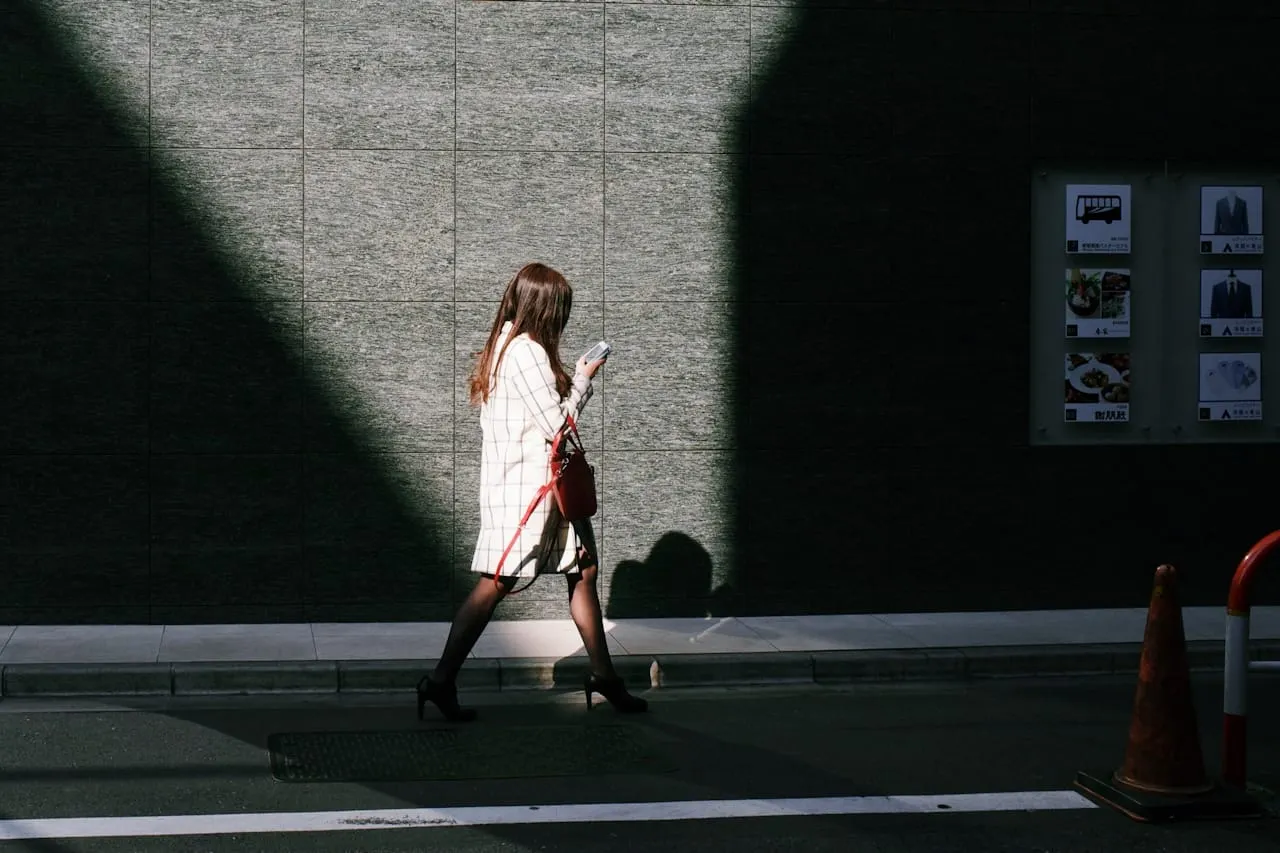
"Elevated basics" is the most profitable phrase in modern fashion, because it lets a brand charge you a premium for the absence of design. No print to execute, no silhouette to risk, just a white tee, a grey knit, a black trouser, and a story. Sometimes the story is true and the garment is genuinely better made. Sometimes the story is the entire product. The industry is counting on you not knowing which is which, so consider this the translation: where the quality jumps actually happen, where they stop, and the exact point in each category where you begin paying for the tag.
The Tee
The truth about the white tee will irritate everyone with a $150 one in rotation: this is the category with the earliest ceiling. Quality in a tee is fabric and cut, and both are largely solved at the low end. Long-staple cotton, the kind that stays smooth and resists pilling, is available for under $25; Uniqlo's Supima line is the standing embarrassment to the entire premium tier, and everyone in the industry quietly knows it.
The real jump happens between $10 and roughly $70, and it buys you weight and cut: a denser fabric that doesn't go sheer over a bra, a collar that survives fifty washes without rippling, and a body cut for an adult woman rather than a unisex rectangle. Sunspel, Lady White, and Leset live here, and the difference from fast fashion is visible across a room. Above that, you are buying drape at the margins and provenance at the core. The Row's $400 tee is a beautiful object with a specific, liquid fall, and if you can see that difference and want to pay for it, that's taste, not fraud. But be clear about the transaction: past $70, the tee stops improving as a tee. You're no longer buying cotton. You're buying citizenship.
Verdict: the honest ceiling is about $70. Everything above it is a mood, which you're allowed to purchase, knowingly.
The Knit
Knitwear is the opposite case, the category where the premium is most often real, because the raw material actually varies and the raw material is most of the garment. Cashmere is not one substance. Fiber length and fineness determine whether a sweater pills into felt by February or gets better for a decade, and long, fine fibers are genuinely expensive at the source. This is why the $89 cashmere crewneck exists and why it disappoints on schedule: short fibers, loosely spun, engineered to feel soft in the store, which is precisely the trick. Softness at first touch is the salesman. Density is the marriage.
The meaningful jump in knitwear runs from about $150 to $450. In that range you can get two-ply, properly dense cashmere or superb merino from labels that spend on fiber instead of campaigns: Naadam and Quince at the entry, &Daughter, Guest in Residence, and Toteme as the spend climbs. Weigh the sweater in your hand; good cashmere is heavy for its size, and a knit that feels like air at $120 is telling you where the money went, which is nowhere. Above $500, the improvements are real but asymptotic, and by the four-figure Loro Piana tier you are once again buying the room the brand puts you in, along with, admittedly, extraordinary fiber.
Verdict: this is the category to spend in. $300 well chosen outlasts three $100 mistakes, and the math isn't close.
The Trouser
The trouser is where "elevated" earns the word, because trousers are construction, and construction is labor, and labor cannot be faked at $60. A cheap trouser is a flat garment: unlined, glued where it should be sewn, hanging from the hip like an apology. A good one is built: a proper waistband with structure, a lining through the seat, seams with enough allowance to alter, and above all a fabric with body, which usually means real wool, and real wool is never cheap.
The jump happens between roughly $200 and $500, and unlike the tee, it's visible from across the street, because drape is the whole silhouette. This is why The Row's reputation was built on trousers rather than tees, and why the knockoff of the shape without the cloth never moves the same way. Below $200, buy trousers expecting to befriend a tailor. Above $500, you're deep into diminishing returns, though deeper than the tee's, because a great trouser is closer to a suit than a basic.
Verdict: spend here second, after the knit, and always budget the $30 hem into the price, because an unaltered trouser at any tier is money left on the table.
The Rule
So the honest hierarchy, whenever the phrase "elevated basics" appears near your card: trousers and knits reward money, tees mostly don't, and in every category the tell is the same. Ask what the price is buying, fiber and construction, or photography and font. The brands doing the first will tell you the fabric weight and the ply without being asked. The brands doing the second will tell you a story about effortlessness, which is the industry's favorite word for a garment that took none.