


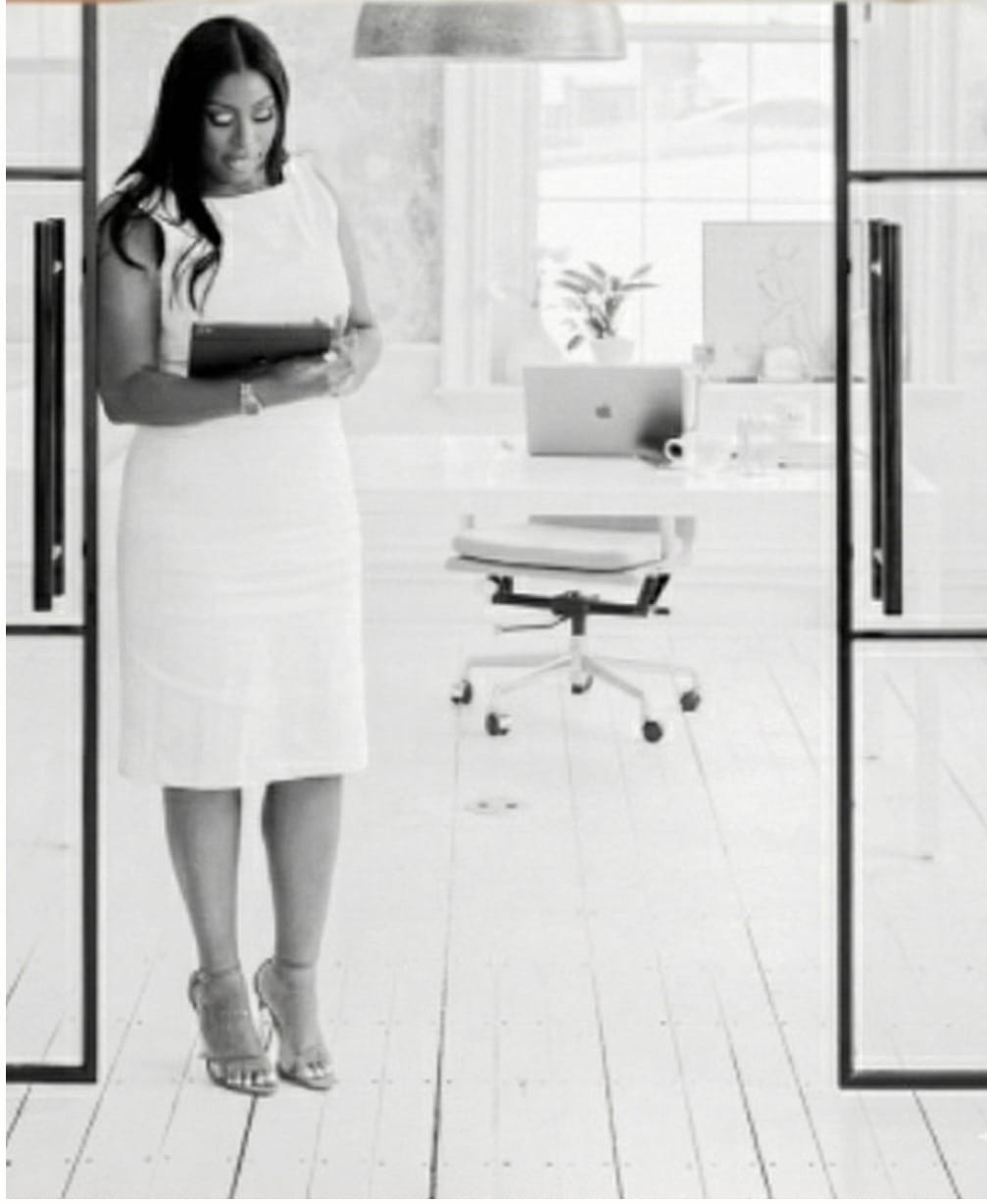

Adrienne Berry spent nearly twenty years inside institutions before she built one of her own.
At the Chan Zuckerberg Initiative, four vice presidencies held throughout her tenure. Before that, people strategy at Uber during the most scrutinized period in the company's history. Earlier still, Dell, Sapient, organizations across three continents — the kind of career that teaches you, with specificity, how institutions actually function. Power does not move the way org charts suggest. Standards do not hold because someone declared them. Culture becomes the thing that determines whether an organization survives its own success, and most organizations discover this too late.
Fiduciary boards. Policy work for one of the largest urban school districts in the United States. Advisory roles for organizations navigating questions most leaders would rather avoid. In every one of those rooms, the standard was under some form of pressure, the easier path was visible, and the cost of capitulating was being quietly assessed. Adrienne held the line, because she understood early that the standard is the thing. Lose it once and you spend years trying to earn it back, and the institution that emerges from that process is never quite the same as the one you started with.
Monclaire is the fullest expression of that understanding applied to a domain that has never received it.
Women's culture has been covered endlessly and taken seriously almost never. Magazines monetized it. Influencers performed it. Content platforms extracted value from it at scale and returned nothing of institutional weight. Taste, lifestyle, preference — the coverage has always treated these as surface when they operate as infrastructure. The objects chosen over decades, the rituals maintained, the private architecture of how a woman actually lives: these are the decisions through which a life takes its shape. Building an institution capable of examining those decisions with genuine rigor required a specific kind of experience, and the kind it required was not editorial. It was institutional — accumulated over two decades of watching standards hold, erode, and witness what it actually costs to rebuild credibility once it has been spent.
When Adrienne surveyed women's media, she found coverage without methodology, recommendations stripped of permanence, verdicts that evaporated with the news cycle. The Michelin Guide for women's culture was absent. The institution of record was absent. The arbiter was absent. A domain that deserved serious institutional attention had received only attention.
Monclaire was built because the institution was missing, and Adrienne had the specific experience required to construct one. This is a different proposition from building what you love, and the distinction matters. The Monclaire standard is structural because Adrienne understands how standards function inside institutions, how they are built to hold rather than to perform. The independence is architectural because two decades of proximity to publications and organizations that traded credibility for access made the alternative obvious. The designation criteria were set before the first piece was published because the most predictable failure mode of any institution is the inability to defend its own criteria under pressure, and Adrienne has witnessed that failure close enough times to deliberately build against it.
Monclaire is being built inside a full life; a husband, three daughters, a senior executive career, a city she has made home. The hours are carved rather than given. That is also part of what Monclaire represents: the institution does not require a cleared calendar or a clean break. It requires a decision about the standard, and then the daily discipline of honoring it regardless of what else the week contains.
The work has already started. It will continue slowly, on purpose, for as long as it takes.
"Women have been curating their lives with extraordinary care for centuries. They just never had an institution that took that work as seriously as they do. I started Modern Monclaire because I was tired of being sold to by publications that assumed I hadn't already done the thinking. I wanted something that respected the woman I'd become—not the one I was supposed to aspire to."
— Adrienne Berry, Founder
