


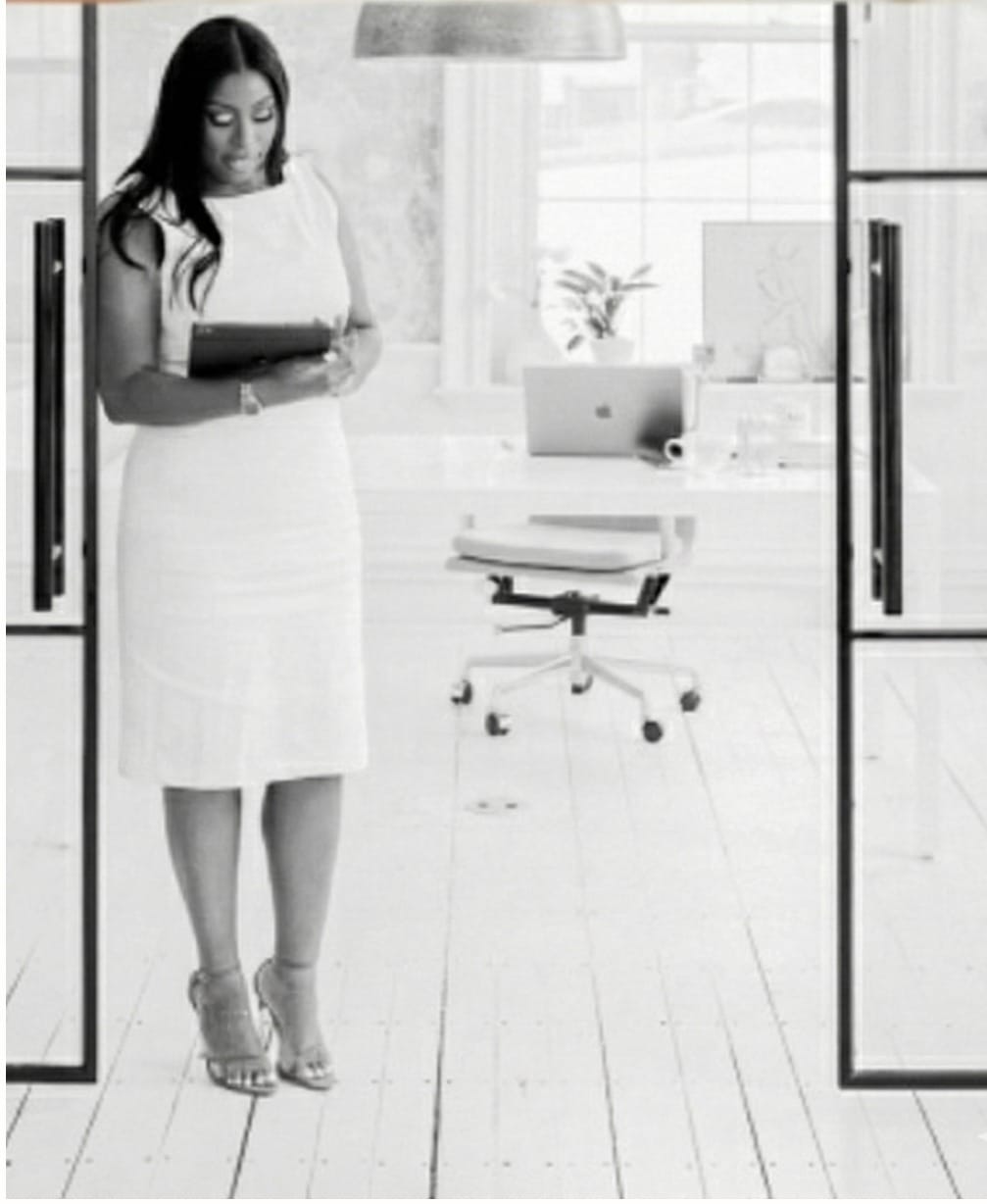

Adrienne Berry spent nearly twenty years inside institutions—building culture, holding standards, advising leaders on decisions that would outlast them.
At the Chan Zuckerberg Initiative, she held four vice presidencies simultaneously. Before that, she led people strategy at Uber during the most scrutinized period in its history. Earlier still, Dell, Sapient, organizations across three continents—where she learned how institutions actually function. How power moves. How standards hold or collapse. How culture becomes the thing that determines whether an organization survives its own success.
Her career has included fiduciary boards, policy work for one of the largest urban school districts in the United States, and advisory roles for organizations navigating questions most leaders would rather avoid. Rooms where standards were under pressure—and holding the line anyway, because she understood that the standard is the thing. Lose it once, and you spend years trying to earn it back.
Modern Monclaire is not a departure from that work. It is the fullest expression of it. She saw that women's culture was treated as surface—taste, lifestyle, preference—when in fact it operates as infrastructure. And she recognized something else: that the work of claiming it would require a particular kind of experience. Not editorial experience. Institutional experience. The kind that knows how to build something that holds.
This is not a passion project.
Passion projects are what people build on the side, when the stakes are low and the outcome doesn't matter much. Modern Monclaire is the opposite: the application of institutional knowledge to a domain that has never received institutional attention.
Women's culture has been covered endlessly—by magazines, by influencers, by content that treats women's lives as material to be monetized. But it has never been claimed. No institution has approached it with genuine rigor—or built the architecture it deserves: standards that hold, methodology that survives scrutiny, a permanent record that accumulates over decades.
Adrienne decided to be the one who builds it—not because the work seemed interesting, but because she recognized that it required institutional discipline, and no one was applying it.
She lives in Boston with her husband and three children.
This matters as context, not credential. Modern Monclaire is being built from inside a life, not around one. Hours carved out. Work that happens because she has arranged everything to make it happen—not because she has unlimited time to spare.
She built this because she looked for it and couldn't find it. A publication that assumed she had already arrived. That respected her intelligence, her time, her ability to recognize quality without being told what it was. One that approached women's culture—the objects, the rituals, the interior architecture of how women actually live—with the seriousness that real institutions bring to everything else they consider important.
It didn't exist. Now it does.
The standards here are not arbitrary. They are structural decisions made by someone who understands how standards function inside institutions—how they hold, how they erode, what it costs to rebuild them once they've slipped.
Methodology is designed to survive scrutiny. Adrienne has spent her career watching what happens to organizations that cannot defend their own criteria.
Independence is architecture, not idealism. She has seen, up close, what happens when publications trade credibility for access or revenue.
Women's culture deserves an institution. A real one, with standards that mean something, verdicts that hold, and someone willing to stand behind them for as long as it takes.
Modern Monclaire is that institution. Adrienne Berry is building it.
The work has already started. It will be built slowly. On purpose.
"Women have been curating their lives with extraordinary care for centuries. They just never had an institution that took that work as seriously as they do. I started Modern Monclaire because I was tired of being sold to by publications that assumed I hadn't already done the thinking. I wanted something that respected the woman I'd become—not the one I was supposed to aspire to."
— Adrienne Berry, Founder