She doesn't remember choosing it.
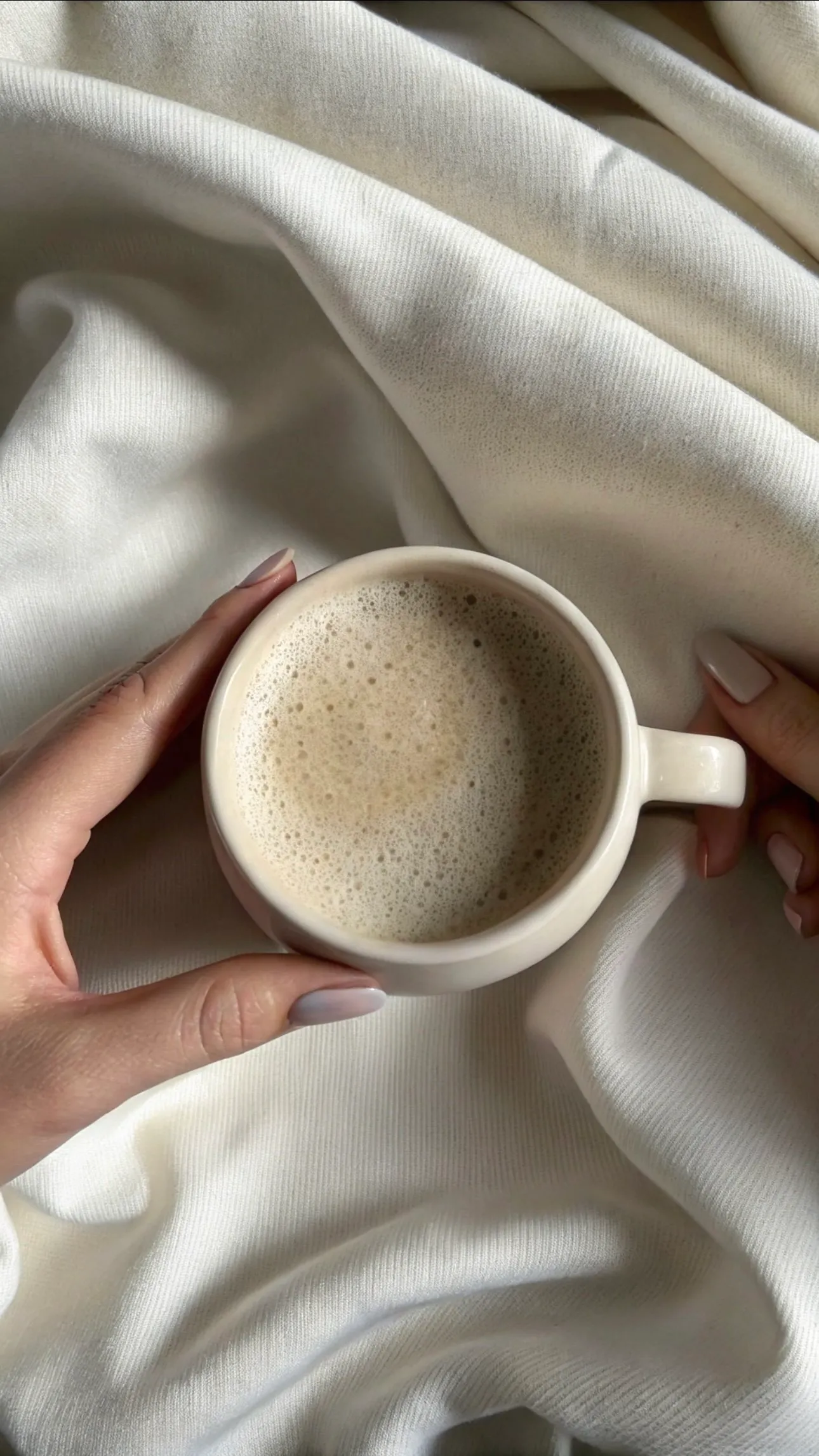
At some point, years ago, this became her coffee. The bag, the method, the ratio she measures without measuring. It settled into place without a decision. It became what she does before she's awake enough to think about what she's doing.
A literary agent in New York described her morning with uncomfortable precision: "I've made the same coffee the same way for eight years. Couldn't tell you what brand. Couldn't tell you when I bought it. The bag is just... there. I replace it when it's empty. The ritual matters to me — genuinely, it's sacred, it's mine. What's in the cup? I realized I'd never once thought about it."
The ritual is deliberate. What's inside it never was.
The Coffee · An Edit asked what it would mean to examine the thing she consumes most and considers least. This dossier is that examination. What separates the coffee she's been drinking from the coffee that exists at the highest tier. Why the bag on her counter may contain a fundamentally different product than what she tasted that one time, somewhere, that made her pause. Which roasters have spent decades building something most consumers will never see. And what it actually takes to make the first ritual of the day worthy of the intention she's already bringing to it.
Twenty-three roasters. Sixty-one coffees. Conversations with competition judges, certified Q Graders, women who've transformed their mornings, and the families who've spent generations on relationships with farmers most of us will never meet.
This is what I found.
The Hillside That Changed Everything
The discovery happened by accident, on a slope in Panama that a family had mostly ignored.
In 2004, the Petersons — third-generation farmers at Hacienda La Esmeralda in the volcanic highlands of Boquete — entered some unusual coffee in a local competition. They almost didn't bother. The trees were scraggly, low-yielding, planted decades earlier on the upper slopes near Jaramillo and treated as an afterthought. The judges stopped talking. The coffee scored higher than anything they'd tasted. Jasmine. Bergamot. Stone fruit. Flavors that belonged in perfume, not in a cup.
The Petersons had stumbled onto Geisha — a varietal that had traveled from Ethiopia's Gori Gesha forest in the 1930s through Tanzania and Costa Rica, arrived in Panama in the 1960s as disease-resistant rootstock, and then been forgotten. For forty years, the trees waited on that hillside. No one knew what they were.
In August 2025, a single twenty-kilogram lot from that same farm — scoring 98 points, the highest ever recorded at Best of Panama — sold at auction for $604,080. Thirty thousand dollars per kilogram. The buyer was Julith Coffee of Dubai.
She will never spend $30,000 per kilogram. But this tier exists, and between the bag on her counter and the auction lots purchased by collectors, there is a vast accessible middle she's never been shown — coffees scoring in the high 80s and 90s, freshly roasted, transparently sourced, available for three to five times what she currently pays. The difference is not three to five times greater. It is categorical.
A physician in Chicago encountered this gap by accident. She was at a conference in Portland, exhausted, running on autopilot. Someone handed her a cup from a roaster she'd never heard of. She took a sip expecting coffee. It tasted like blueberries.
"I looked at him like he'd put something in it. He said it was Ethiopian, natural process — the fruit that surrounds the coffee seed had been left intact during drying, fermenting in the sun for weeks. I'd been drinking coffee for twenty-two years. I'd never tasted anything like it."
She went back to her hotel that night and looked at the packets by the Keurig machine. Premium Roast. Rich and Smooth. She realized she had no idea what any of those words meant — or why no one had told her that coffee could taste like what she'd just experienced.
The Vocabulary That Replaces Information
"Artisan." "Small-batch." "Craft." "Hand-roasted." "Premium." These words appear on nearly every bag that costs more than grocery-store standard. None of them are regulated. None of them are verified. A coffee roasted in a factory the size of an airplane hangar can legally call itself small-batch. The words mean whatever the marketing department decides.
"Single-origin" sounds meaningful. It can mean a single hillside harvested on a single October morning. It can also mean any of 600,000 farms across Colombia, blended beyond recognition. The consumer has no way to distinguish. In The Linen · A Dossier, I documented how "Egyptian cotton" — a term that should guarantee quality — appears on products that contain no extra-long-staple varieties whatsoever. Coffee operates the same way. The label does the work. The product doesn't have to.
Only one term in coffee carries actual regulatory weight: "specialty," scored on a 100-point scale by certified Q Graders who have passed a rigorous 22-test examination. Several thousand people in the world hold this credential. Below 80 points: commercial grade. Above 80: specialty. Above 90: exceptional, representing perhaps half a percent of global production.
She has probably never seen an SCA score on a bag she purchased. The roasters who have them print them. The roasters who don't use other words instead.
A woman in Seattle who spent fifteen years in wine — running inventory for a collector, learning to parse the difference between vocabulary and substance — described her frustration when she turned to coffee: "I knew how to read signals. Appellation, producer, vintage. I understood what was real and what was packaging. Coffee gave me nothing. 'Premium blend.' 'Artisan roasted.' The bag looked expensive.
It told me nothing."
This post is for subscribers on the Founding Subscriber tier
SubscribeAlready have an account? Sign In